







A fact that is not widely known is that the Bank of International Settlements (BIS), under Basel lll, changed the risk weighting of gold that Banks hold on their balance sheets.
The Bank for International Settlements is an international financial institution owned by central banks. BIS “fosters international monetary and financial cooperation and serves as a bank for the central bank” (Wikipedia).
Basel III is a global, voluntary regulatory framework on bank capital adequacy, stress testing, and market liquidity risk. This third instalment of the Basel Accords was developed in response to the deficiencies in financial regulation revealed by the financial crisis of 2007–08 (Wikipedia).
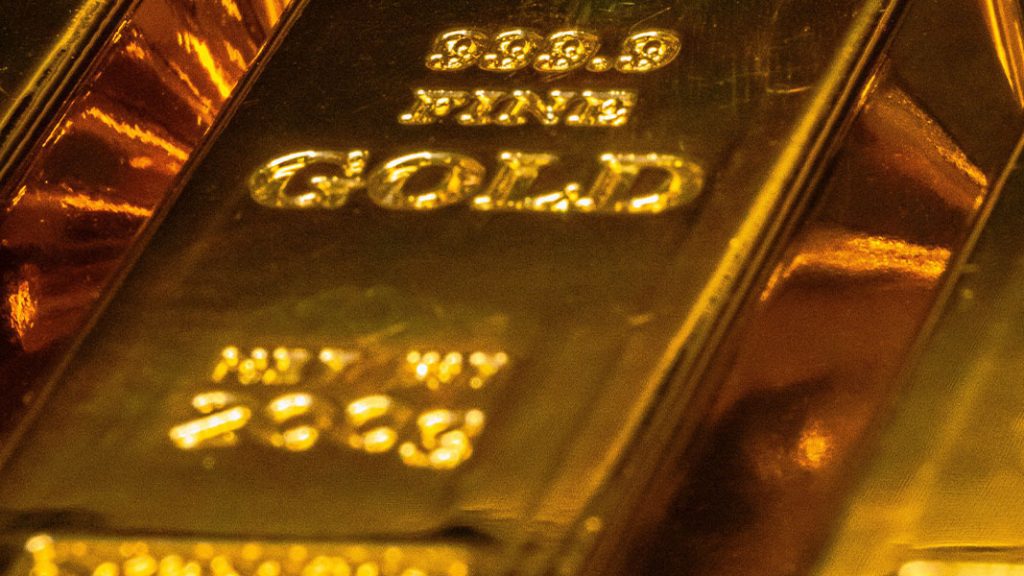
Gold was previously viewed as a risky asset. It was classified as a Tier 3 asset, which meant that gold could only be carried on banks’ balance sheet at 50% of the market value for reserve purposes.
If a bank-owned a $1m of gold and its capital adequacy ratio was 10%, then the required capital the bank needed was $1m x 50% (risk weighting) x 10% (capital adequacy ratio) equals $50,000.
On the 1st of April 2019, Gold was reclassified as a Tier 1 asset and its risk-weighting was reduced to zero. Other words, Banks do not need any capital to hold gold.

This re-rating of gold, by the BIS, to become a risk-free asset (for capital purposes) is quite a big deal. According to Australia’s Prudential Regulation Authority the main assets that qualify for the zero risk weight are:
- Notes and Coins
- Australian dollar claims on the Reserve Bank of Australia
- Australian dollar claims on the Australian government
- Claims on appropriately rated overseas central governments
- Gold held in the Banks’ vault or on an allocated basis by another party.
When Gold became a Tier 1 asset in 2019, together with a rise in gold prices, holdings of gold in Global Exchange Traded funds went much higher.

Global Exchange Traded funds have added 877 Tonnes of gold to their holdings in the year until the end of 2020. There is a total of 3,750 Tonnes valued at $USD$228 Billion.
Since the GFC, World Central Banks have steadily increased their holdings of Gold from 30,400 Tonnes in September 2009 to 35,170 Tonnes currently. The holdings are valued at $2.1 Trillion USD. The trend appears well established, with approximately 400 to 600 tonnes being added to reserves per year.
A tonne of gold equates to 32,150 ounces or nearly USD$60m per Tonne.
The trend towards gold by the world’s central banks commenced in the GFC. Presumably this a substitute away from the world’s reserve currency, the US dollar. Interestingly the biggest increases in gold holdings since the GFC has been China, Russia, India, Turkey, Philippines, Poland, Mexico, Kazakhstan, Korea and even the Bank of International Settlements (BIS).
On the other side, close US allies like Australia have decreased their holdings by 15%. Canada does not hold gold, and the International Monetary Fund’s holdings have fallen 13%.

source: https://www.gold.org/
ETF gold holdings and World Official gold reserves total about $USD 2.3 Trillion in value. The total amount of US dollar debt outstanding is $27.7 Trillion, a rise of about $15 trillion since the GFC. With claims on the US Government and Gold both being considered a risk free asset by the Bank for International Settlement, you will need to decide which risk free asset is more likely to hold its value, relatively speaking.
A new Bretton Woods moment
A significant speech was made by the International Monetary Fund’s Managing Director, Kristalina Georgieva in October 2020. She said, “Today we face a new Bretton Woods “moment.” A pandemic that has already cost more than a million lives. An economic calamity that will make the world economy 4.4 % smaller this year and strip an estimated $11 trillion of output by next year.And untold human desperation in the face of huge disruption and rising poverty for the first time in decades.”
“That includes keeping a careful watch on risks presented by elevated public debt. We expect 2021 debt levels to go up significantly – to around 125 per cent of GDP in advanced economies, 65 per cent of GDP in emerging markets; and 50 per cent of GDP in low-income countries.”
The original Bretton Woods agreement in 1944 was where the World responded to the devastation caused by the War. They made the American dollar (backed directly by gold) the World’s reserve currency. America unilaterally abandoned the gold standard in 1971 after its gold reserves were drained by other countries. Other countries were fearful of America’s massive increase in debt, switching their US dollars for gold. Commentators, especially gold bulls, therefore interpreted IMF’s Kristalina Georgieva recent speech as a possible return to a gold standard.
America’s accelerating public debt is only enabled by its status as the World’s reserve currency, not by the soundness of the country’s financials. The IMF recognises the risk the increasing debt places on the stability of the financial system, but it is unlikely that there will be a return to a gold standard, in part due to the fact that there is not enough to support World trade.
In the realms of possibility is that gold may be part of the solution that includes a basket of commodities/currencies replacing the sole use of the American currency as the World’s reserve asset. The move by the BIS to make gold the same status as the American currency is certainly a move in that direction, together with the recognition from the IMF that things need to change.

Michael Cornips is the Managing Director and Founder of Emerald Financial.
Latest posts by Michael Cornips (see all)
- How the Chevron Doctrine decision could shake the environment and investors - July 10, 2024
- Why a tsunami of liquidity might be on its way - July 5, 2024
- A quick explainer on Hybrids and why people trade them - June 24, 2024

Leave a Comment
You must be logged in to post a comment.